Most weak nature writing fails for the same reason weak writing fails anywhere: the sentences are doing work the observation should have done. The writer knows the marsh, the frost, the fox. Then the prose arrives, and everything goes soft. The fox becomes "a magnificent creature", the frost "a glittering carpet", and the reader is left holding a handful of adjectives. These problems are remarkably consistent, which is good news. Once you can name them in your own drafts, you can fix them in an afternoon.
"The bird flew away." Which bird? A sparrow, a heron, a hen harrier? The sentence has told us almost nothing, and it has done so in the flattest possible way. Specificity is not decoration; it is the whole transaction between writer and reader. Compare: "The wren went off through the hedge like a stone from a sling." One noun and one verb, and you can see it.
The fix is not to reach for a field guide and start guessing. If you genuinely do not know the species, describe what you saw: "a small brown bird with its tail cocked straight up, working the base of the wall." That is honest, and it is more vivid than a wrong name. The same rule applies to places. Not "a tree" but "the ash by the gate"; not "the river" but "the shallow bend where the gravel shows through". Name things at the size they actually are.
Purple prose is usually a symptom of a writer who does not yet trust the material. So the sun cannot simply set; it must "descend in a breathtaking symphony of fiery colour". The sky cannot be grey; it must be "a sombre blanket of melancholy". This kind of writing asks the reader to admire the author rather than look at the world.
"The sun went down behind the ridge and the sky turned the colour of a bruise" is not a great sentence, but it is a specific one, and it leaves the reader some room. That room is where their own memory of evenings gets to work.
Some drafts read as though the landscape were being described by a camera on a tripod. Everything is accurate, and nothing is alive, because there is no one standing in the cold. You do not need confession or drama. You need a witness with a body. Cold hands. Mud to the ankle. The wrong turn at the stile. The fact that you had been up since five and had begun to resent the heron for not moving.
Keep it small and physical and it will never tip into memoir. One detail of posture or discomfort does more than a paragraph of reflection: "I crouched until my knees complained, and the deer went on grazing." Now the reader is crouching too.
"It was a sad and beautiful sight." "The scene filled me with wonder." Sentences like these hand the reader a conclusion and confiscate the evidence. Feeling in nature writing comes from the accuracy of the account, not from the label attached to it. Describe the fox at the edge of the lamplight, the rib showing, the way it did not run. Let the reader arrive at sorrow on their own. They will trust a feeling they earned.
The related habit is borrowing other people's wonder: "nature's cathedral", "the great outdoors", "untouched wilderness". The last one is also often untrue. Very little of what we call wild is empty of history — walls, drains, coppice stools, a hedge laid a century ago. Noticing that is more interesting than pretending you found Eden.
A four-mile walk fills six pages. The essay is nine hundred words. Somewhere in the transfer, writers decide that every observation has earned its place, and the piece becomes a list of things seen in the order they were seen. The reader has no reason to keep going, because nothing has been chosen.
Selection is the work. Find the spine of the piece — one walk, one weather, one question — and cut anything that does not pull on it, including the detail you love most. A useful test: cover the paragraph and ask whether the piece is worse without it. If the answer is a shrug, it goes. Keep the heron if the heron is the point. Lose it if it just happened to be there.
"The birds sang in the trees and the flowers bloomed." This sentence could have been written anywhere, in any century, by someone who had never gone outside. Nature writing is time-stamped by nature. Give the reader the date, the hour, the wind, the state of the ground. Late March, seven in the morning, a hard frost after two mild weeks, the path still rutted from February. Now the blooming means something, because it is early or late or exactly on time.
Season is not a backdrop; it is plot. A hedge in April and the same hedge in September are two different characters.
"There was a heron in the shallows." "It was quiet." The verb to be is not a crime, but when it carries a whole paragraph, the writing goes flat. Push the sentence until something happens: "The heron stood in the shallows, then took one step and stopped."
Dead metaphors are the other half of this. "A carpet of bluebells", "a blanket of snow", "the trees stood like sentinels". They arrive pre-faded. Either find the comparison yourself, by looking longer, or leave it out and give the plain fact, which is usually stranger: bluebells under beech, the flowers on one side of the path only, because the light falls that way.
Three weeks later you will be certain the deer was a roe deer, and you will be wrong. You will move the weather to the wrong day and put the call of a curlew where there was no curlew. Memory tidies, and tidying is invention. Go back to the notes, and where the notes are silent, be honestly uncertain: "I think it was a stonechat", "probably the same bird as before". Readers forgive hesitation. They do not forgive being quietly misled, and the naturalists among them will notice.
This matters more in nature writing than in most nonfiction, because the details are checkable. Leaf arrangement, flight pattern, the order in which things happen in spring — get them right, or describe only what you actually saw.
Take a draft you have let sit for a day. Work through it in this order, and resist fixing everything at once.
Then put it away again. Nature writing rewards the second look more than the first burst of enthusiasm, and most of these mistakes survive only because nobody went back.
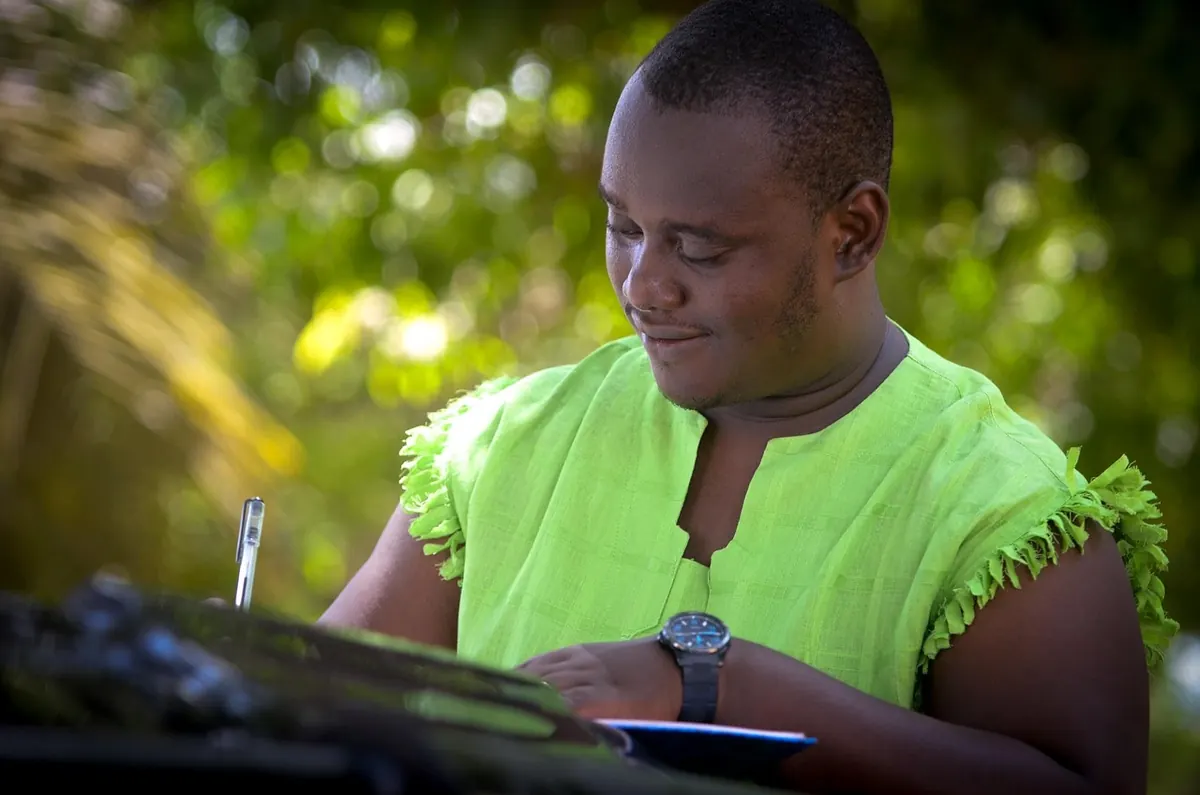
Photo: dmaxjr0 / Pixabay

A practical guide to building vivid scenes, portraying rural people with care, and making setting do real narrative...

A twelve-question checklist for rural essays: verify the facts, sharpen the detail, treat neighbours fairly, and...

A practical, ethical method for gathering village memories — from the first knock on a neighbour's door to a...


Stories and notes from a country scribe.
